



If you’ve ever sent a perfectly laid-out document to a translator and got back something that no longer fits its own template, you’ve experienced language expansion first-hand.
It’s one of those translation planning problems that catches people out repeatedly — not because it’s hard to understand, but because it’s easy to forget until it’s too late. German expands by around 30%. Finnish can push beyond 35%. Arabic, on the other hand, will likely be shorter than your English source — but will also need an entirely different layout, because it reads right to left.
Why Translation Text Expansion Matters for Technical Documentation
For technical authors, documentation managers, and anyone working on IFU translations, labels, packaging, or multilingual UI strings, these expansion rates aren’t just interesting — they’re a planning essential. Building in appropriate space from the design stage is far cheaper than DTP rework after the fact.
How to Use This Translation Length Calculator
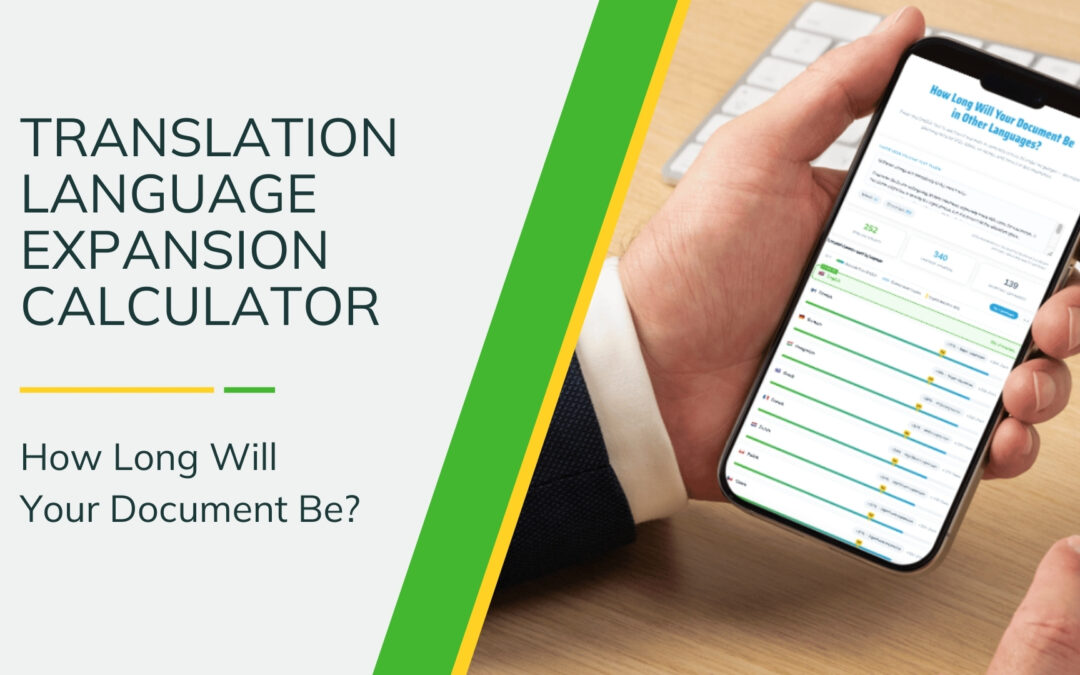
Paste any block of English text into the tool below — a section of an IFU, a label, a UI string, whatever you’re working with — and it will instantly show you the estimated character count across 20 major languages, with each result colour-coded by how much it expands or contracts.
Hover over any language for a practical note on what that expansion means for layout and DTP planning. The yellow EN marker on each bar shows you exactly where English sits, so you can see at a glance how far each language moves from your baseline.
These are averages based on documented technical translation data, so treat them as planning guides rather than precise predictions — actual expansion will vary depending on content type and terminology. If you’d like a more detailed estimate for a specific project, we’re happy to help.
How Long Will Your Document Be
in Other Languages?
Paste any English text to see how it expands or contracts across 20 major languages — essential planning data for IFUs, labels, UI strings, and technical documentation.