


Specialists in the Translation of Medical Documentation
Need a quality medical translation done?
Omnilingua, based near London, provides translation services for the Medical industry, as follows:
- Medical Device & Equipment language translation
- Biomedical & In Vitro Diagnostic language translation
- Pharmaceutical & Clinical Research language translation
- Biotechnology language translation
The difference between sourcing individual translators, or using your overseas agent / translation office and working with Omnilingua looks like this…
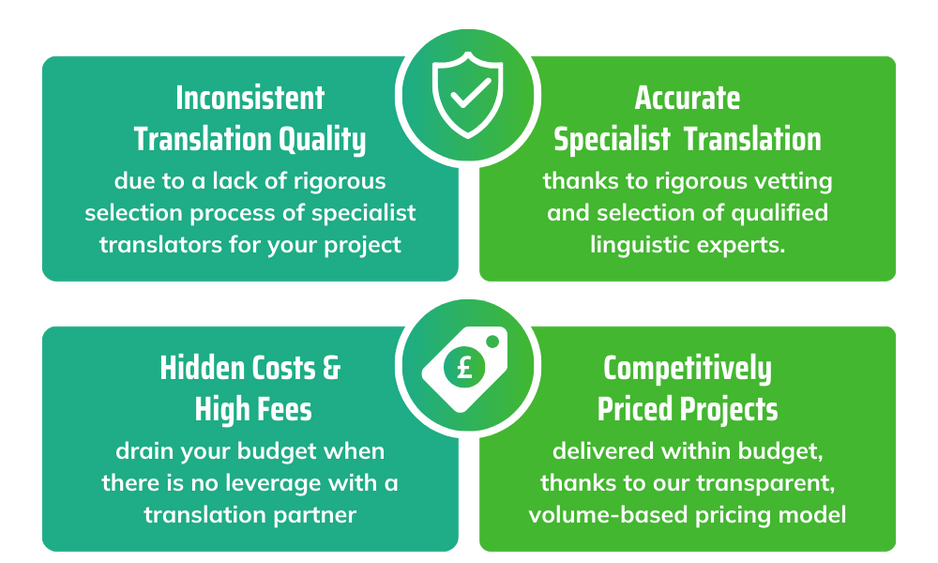
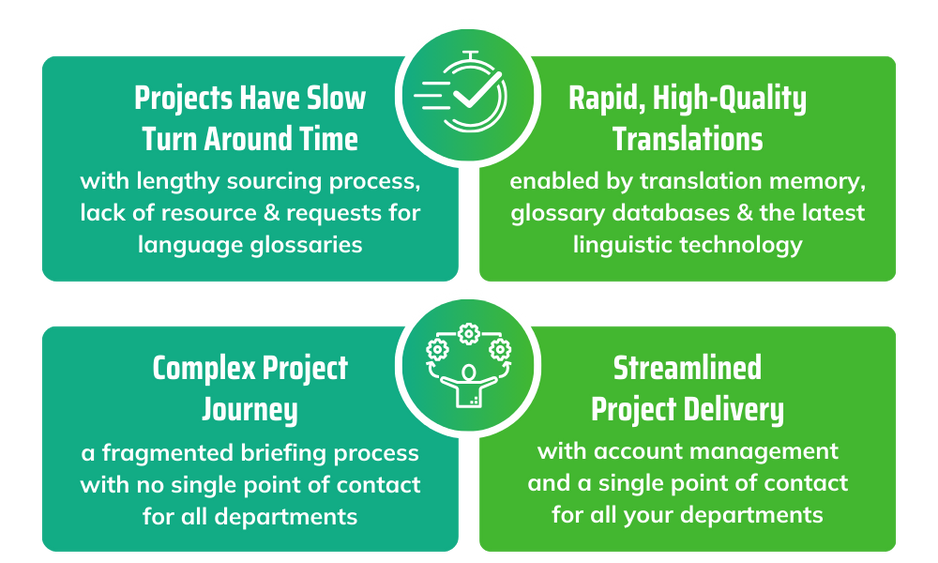
With Omnilingua your translation process is transformed.
Specialists in the Translation of Medical Documentation
We specialise in the translation of medical documentation with an extensive global network of fully-qualified, experienced and reliable translation professionals.
To ensure accuracy all our translators only ever work into their mother tongue and on texts which are within their specific area of medical expertise.
We encourage early involvement with our clients’ overseas partners getting their input based on their specialist product and market-level knowledge. In this way rapid acceptance of final Omnilingua translations and term glossaries is assured.
Consistency and Reduced Costs
In order to maintain consistency and reduce costs all our translation teams use the latest ‘industry-approved’ CAT language technology (e.g Trados, Atril Déjà Vu, STAR Transit software) to build translation databases.
To harmonise with our clients’ approved terminology we can also leverage already existing translated material using this system and create new memory databases. We also create process-critical terminology glossaries using term mining tools.
A software GUI localisation service is also provided using the latest localisation tools (e.g Alchemy Catalyst, Passolo software).
File Formats
Where multilingual design is required our in-house desktop publishing team can handle most file formats ready for print or other media (e.g In-Design, QuarkXpress, Framemaker, Pagemaker, SGML, XML).
Omnilingua Limited are members of the following organisations:
- Institute of Scientific & Technical Communicators
- ATC – Association of Translation Companies
Trust Omnilingua with your next medical translation project.
Frequently Asked Questions: Medical Translation Services
What medical translation services does Omnilingua provide?
Omnilingua provides specialist medical and healthcare translation across the full device documentation lifecycle – Instructions for Use, labelling and packaging, regulatory submission files, clinical documentation and post-market materials. Each project is matched to translators with genuine subject expertise, drawing on more than 25 years’ experience in medical device and healthcare translation. For specific document sets, see our medical device IFU translation services and our IVDR & MDR translation services.
Which sectors and clients do you work with?
We work with medical device and IVD manufacturers, pharmaceutical and biotechnology companies, and the CROs supporting them, from single-market submissions to full European launches. Translators are selected for expertise in the relevant field – diagnostics, implantables, pharmaceuticals or clinical research – rather than being assigned by availability. You can see examples of this work across our medical translation testimonials.
What qualifications do your medical translators have?
Our medical translations are produced by qualified, native-speaker translators who specialise in healthcare and hold relevant subject expertise, not general linguists working outside their field. Every project runs through established checking procedures so that terminology and safety-critical detail are verified by a second specialist.
What quality standards do your medical translations follow?
Our medical translations are produced under ISO 17100:2015 certified processes – the international standard for translation services – and in accordance with the BS EN 15038 European quality standard. Omnilingua is also a member of the Association of Translation Companies. These processes give Notified Bodies and regulators the demonstrable quality assurance they expect behind every language version.
How do you support regulatory compliance for medical device documentation?
We work in accordance with EU MDR and IVDR requirements, keeping terminology consistent across your documentation and managing quality assurance to support regulatory acceptance. Translations are aligned to the current source files so that IFUs, labelling and submission documents remain consistent throughout the device lifecycle. Our MDR translation requirements guide sets out the requirements in detail.
Do you translate clinical and pharmaceutical documentation as well as devices?
Yes – alongside medical device documentation we translate clinical trial materials, pharmaceutical labelling and patient-facing content for sponsors, manufacturers and CROs. Clinical and pharmaceutical documentation carries its own regulatory and linguistic requirements, so these projects are handled by translators experienced in that specific area. Our article on clinical trial translation and what CROs need to know covers this in more depth
How do you handle confidential medical and commercial information?
Confidentiality is built into how we work: project files, regulatory documents and commercial information are handled securely and shared only with the specialists assigned to your project. We are happy to work under your own confidentiality agreements where required. To discuss a project on this basis,request a medical translation quote or contact us.
Want to learn more?
Two FREE guides, emailed directly to you.
Translation Guide
Get a better understanding of what to look for, and what to avoid, in the business of translation.
Quality Manual
Learn more about our process and quality control. What makes us the best in our field?