



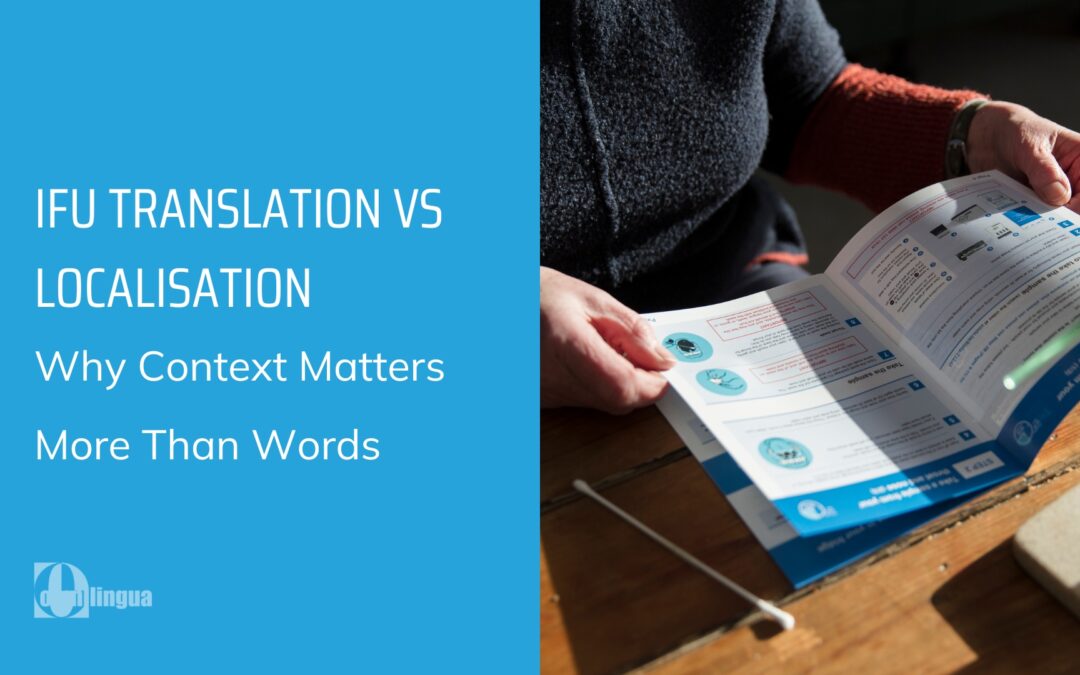
When a German patient receives a new medical device, they expect instructions that feel familiar and trustworthy. When an Italian healthcare professional opens an IFU, they need guidance that aligns with their clinical practices. This isn’t just about language—it’s about understanding how culture shapes the way people interact with medical technology.
Many medical device manufacturers think they’ve ticked the localisation box once they’ve translated their Instructions for Use into the required European languages. But there’s a crucial difference between IFU translation and localisation that can make or break user adoption and, ultimately, patient safety.
Beyond Words: The Cultural Dimension of Medical Instructions
Translation converts words from one language to another. Localisation adapts the entire communication to feel native to the target culture. In the context of medical device translation, this distinction becomes critical when you consider how deeply culture influences health behaviours and medical practices across Europe.
Take something as fundamental as pain communication. In Nordic countries, patients tend to be more reserved about expressing discomfort, often describing pain in measured, clinical terms. Mediterranean cultures, by contrast, may use more expressive language when discussing symptoms. An IFU that asks patients to “monitor discomfort levels” might resonate perfectly in Sweden but feel cold and impersonal in Spain, where “being attentive to how you feel” would be more culturally appropriate.
These differences extend far beyond language preferences. They influence how patients interact with their healthcare providers, follow medical instructions, and perceive the authority of medical devices themselves.
The Visual Language of Medicine
Cultural adaptation goes well beyond text. Visual elements in IFUs carry cultural weight that can either enhance or undermine user confidence. Consider the challenge of depicting diverse patient populations in instructional diagrams. A device designed for elderly care needs to show users who reflect the target demographic, but cultural norms around ageing, independence, and family care vary significantly across Europe.
In Germany and the Netherlands, there’s often an emphasis on individual patient autonomy and self-management. IFU visuals might show patients confidently using devices independently. In contrast, Southern European cultures often emphasise family involvement in healthcare decisions. The same device might benefit from imagery showing family members or caregivers participating in the process.
Even colour choices matter. While red universally signals caution in medical contexts, the specific shade and cultural associations can vary. What feels urgent and authoritative in one culture might feel aggressive or alarming in another.
When Clinical Practices Shape Instructions
Perhaps nowhere is cultural adaptation more crucial than in aligning IFUs with local clinical practices. European healthcare systems, whilst sharing many similarities, operate with distinct protocols, hierarchies, and patient interaction patterns that affect medical translation requirements.
In the UK’s NHS system, patients are often encouraged to take an active role in their care management. IFUs might include detailed self-monitoring instructions and guidance on when to contact healthcare providers. However, in countries with more hierarchical healthcare systems, patients might expect their doctors to take a more directive role. The same device might require IFU language that emphasises professional oversight rather than patient autonomy.
These differences become even more pronounced when considering home-use devices. A diabetes monitoring system used in France, where there’s strong emphasis on lifestyle and dietary management, might benefit from IFU language that connects device usage to broader wellness practices. The same device in Germany might focus more on precision, data tracking, and systematic monitoring—reflecting cultural values around thoroughness and efficiency that impact technical translation approaches.
The Psychology of Trust in Medical Technology
Cultural attitudes towards technology and medical authority profoundly influence how users perceive and follow IFU instructions. In Scandinavian countries, where there’s high trust in both technology and healthcare systems, IFUs can often be more concise and assume user competence. Users are comfortable with technical language and expect efficient, straightforward guidance.
In contrast, cultures with more cautious attitudes towards new technology might benefit from IFUs that provide extensive reassurance, detailed explanations of safety measures, and clear guidance on recognising normal versus concerning outcomes. This isn’t about intelligence or capability—it’s about cultural comfort levels with medical technology and the communication style that builds confidence in regulatory compliance.
Getting Localisation Right
Effective IFU localisation requires understanding these cultural nuances from the design phase, not as an afterthought. It means working with linguists who understand not just language, but healthcare culture in their markets. It involves considering how medical professionals and patients in each country prefer to receive and process medical information.
Most importantly, it recognises that successful medical device adoption depends on users feeling that the technology understands their world—their healthcare system, their cultural values, and their communication preferences.
When IFU localisation gets this balance right, the results go far beyond regulatory compliance. Users feel more confident, adoption rates improve, and the device becomes a trusted part of their healthcare journey rather than a foreign intrusion.
Ready to ensure your medical device IFUs truly connect with users across European markets? Our specialist team understands both the linguistic and cultural nuances that make the difference between compliance and genuine user adoption. Get in touch to discuss your next project and discover how cultural adaptation can transform your user experience.