


The transition from the Medical Device Directive (MDD) to the Medical Device Regulation (MDR) has brought significant changes to documentation and translation requirements. For medical device manufacturers, understanding and implementing these changes is crucial for maintaining market access and regulatory compliance.
Key Changes in Documentation Requirements
The MDR introduces stricter controls on technical documentation and translations. Unlike the MDD, which had more flexible requirements, the MDR demands comprehensive documentation in the native language of each EU member state where the device is sold.
This includes:
- Technical documentation and quality management system records
- Instructions for Use (IFU) and safety information
- Product labelling and packaging
- Marketing materials and digital interfaces
- Post-market surveillance documentation
Impact on Translation Requirements
Under MDR, medical translation services must meet higher quality standards. Manufacturers need to ensure:
- Consistent terminology across all documentation
- Validated translations by subject matter experts
- Regular reviews and updates of translated materials
- Complete documentation trail for compliance
- Market-specific language requirements
Cost and Timeline Considerations
Early planning is essential for managing translation costs and meeting compliance deadlines. Working with experienced technical translation providers can significantly reduce both time and cost implications of MDR compliance. Translation memory technology plays a crucial role by storing previously translated content, enabling reuse across documentation and reducing translation costs by up to 30%. This approach, combined with consistent terminology management across all documentation, ensures efficiency while maintaining quality standards.
Effective project planning should account for review cycles and validation processes, which typically require input from multiple stakeholders.
A well-structured documentation management system can streamline these processes, reducing bottlenecks and ensuring timely completion of translation projects.
Companies that implement these systems early often see substantial cost savings and shorter turnaround times for future updates.
Compliance Challenges
Meeting MDR translation requirements presents several interconnected challenges for medical device manufacturers. Managing multiple language versions while maintaining consistent terminology across all documentation requires sophisticated version control systems and careful coordination.
Companies often struggle with synchronising updates across different language versions, particularly when changes affect multiple documents simultaneously.
The complexity increases when coordinating reviews with subject matter experts across different regions. Each market may have specific requirements or preferences that need to be balanced against the need for global consistency.
Additionally, tracking changes and maintaining proper documentation for compliance audits requires robust systems and processes. Many manufacturers find that traditional document management approaches become inadequate under the more stringent MDR requirements, necessitating new solutions for effective compliance management.
Planning for Success
Successful MDR translation compliance requires careful planning and execution.
Key steps include:
- Auditing existing translations
- Identifying new requirements
- Establishing quality processes
- Creating review teams
- Implementing version control
Next Steps
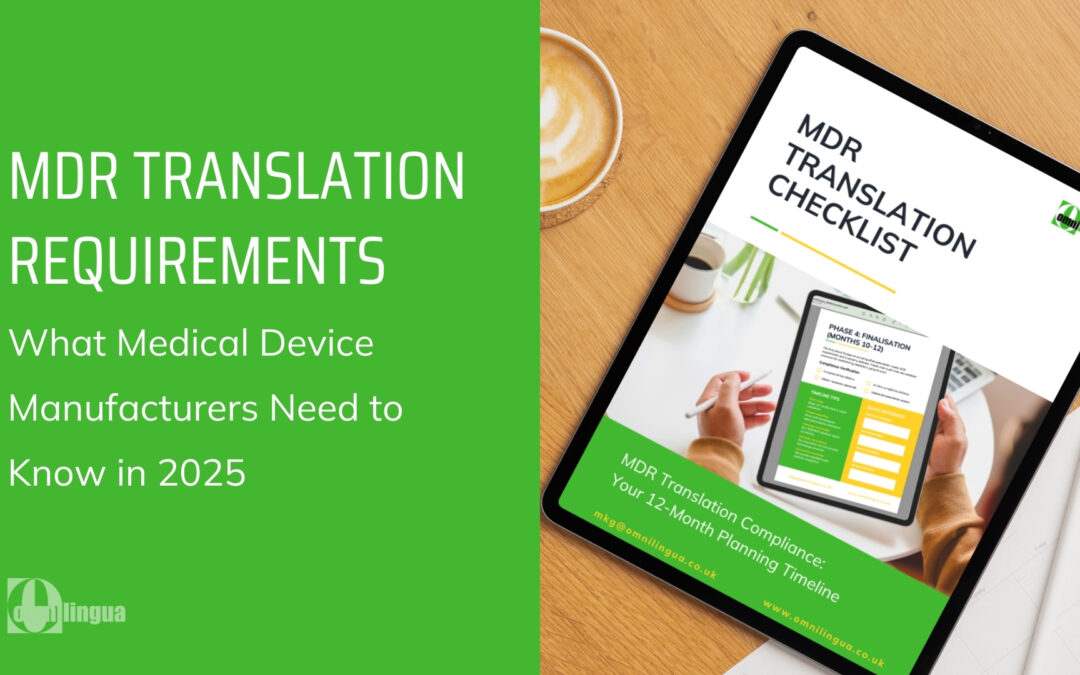
Meeting MDR translation requirements doesn’t have to be overwhelming. Download our free MDR Translation Compliance Checklist to ensure your documentation meets all requirements and deadlines.

If you would like to talk to us about how we use translation technology and project management systems to ensure fast, efficient and accurate medical device document translation, please get in contact anytime.